Small Backyard Privacy Ideas for Townhomes and Tight Spaces
A townhome backyard can be surprisingly useful, even when it is only large enough for a small table, a grill and a few planters. The challenge is that neighbouring windows, shared fences and closely spaced patios can leave very little room to relax without feeling watched.
Adding privacy sounds straightforward until you consider what a tall fence might do to a narrow yard. It can block the view from next door, but it may also reduce sunlight, interrupt a welcome breeze, and make an already compact space feel smaller.
The best small backyard privacy ideas solve the particular sightlines that bother you without enclosing every side. Depending on the layout, that might mean one strategically positioned screen, a narrow row of plants, a fence extension, or a section of adjustable louvers.
Key Takeaways
- Check views from neighbouring windows and seating areas before deciding where a screen belongs.
- A single privacy panel can be more useful than replacing an entire boundary fence.
- Tall planters and narrow trellises add screening, but need room for roots, maintenance and growth.
- Adjustable louvers can change the balance between screening, daylight, and airflow.
- For townhomes and condos, confirm property lines, shared-wall rules, and any association approvals before construction.
What Works Best for Privacy in a Small Backyard?
Start where you actually spend time. Sit in your patio chair, stand at the grill, and look toward the neighbouring properties. A window overlooking the dining table may matter more than the entire fence line. A walkway behind the yard might call for screening at one end rather than along both sides.
Also consider where the view comes from. A boundary fence may shield the patio from passersby but do little against a second-storey window. Moving the table nearer the house or screening the seating area from a higher angle could be more effective than raising the fence.
For backyard privacy ideas for small yards, the real trade-off is between screening and openness. Solid panels provide consistent separation, but planting and open slats admit more light and can leave gaps. Our guide to backyard privacy ideas that don’t feel closed in explores ways to manage that balance.
8 Small Backyard Privacy Ideas for Townhomes and Tight Spaces
1. Screen the Seating Area Instead of the Whole Yard
If your backyard is narrow, start with the place where people sit. A short run of screening beside a dining table or lounge chair can interrupt a neighbour’s direct view without taking over the entire yard.
For example, a townhome patio with fencing on two sides may only need one additional panel near the house. Keeping the far end open preserves a sense of depth, which is especially helpful when the yard is only a few steps wide.
Test the screen position from seated and standing heights before choosing its dimensions. A panel may block the view across a dining table but leave someone standing beside it exposed.
2. Build a Narrow Adjustable Louvered Privacy Screen
An adjustable louvered panel is worth considering when privacy needs change throughout the day. You might want more screening while eating outdoors, then prefer an open view and better airflow when the patio is empty.
Our FLEXfence Louver System is a DIY hardware system for building adjustable louvered sections with appropriately sized lumber, commonly 1 × 6 boards. You can install the rails for horizontal or vertical louvre operation. The hardware does not include a finished privacy screen; you select and build the supporting frame and boards for the project.
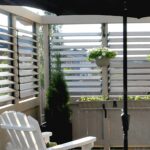
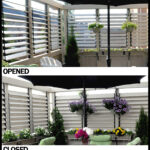
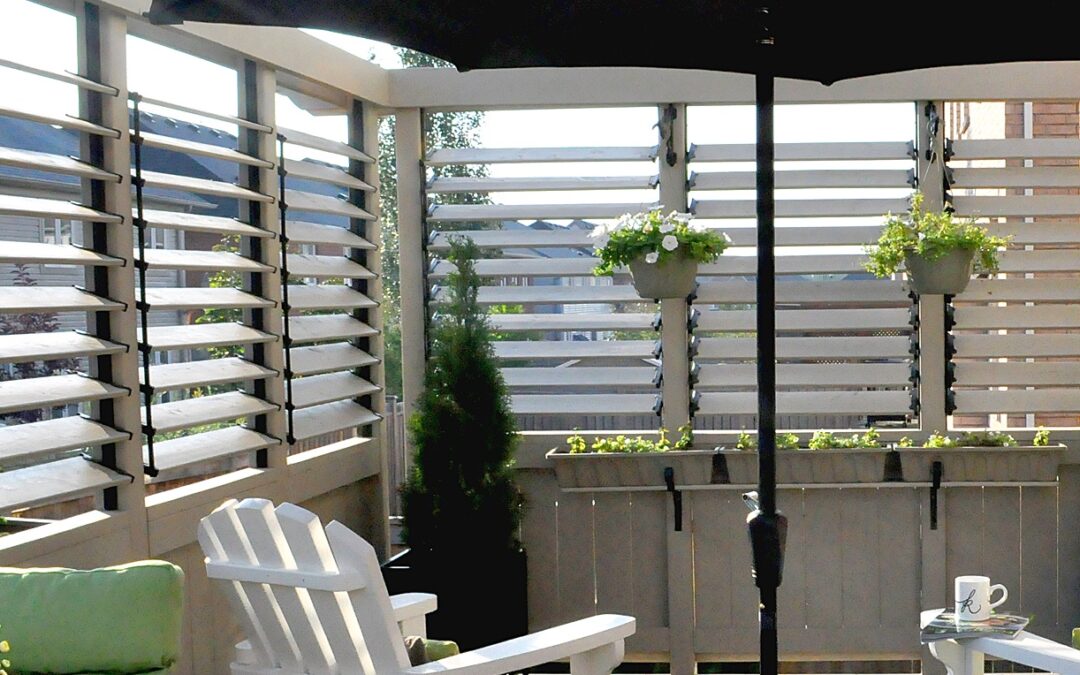
In a small yard, you can place one louvered panel beside a patio, along part of a fence, or within a purpose-built frame. Closing the boards can increase screening, while opening them admits more light and air. Actual privacy depends on the board angle, gaps, and the direction from which someone is looking.
For a real example of targeted screening in a densely built neighbourhood, see this louvered privacy wall built in Tokyo. The project is useful for seeing how placement changes an overlooked space, although its supporting wall and construction details should not be copied without checking your own site.
3. Use Tall Planters Where Permanent Fencing Is Not Practical
Tall planters offer a softer way to break up a view. They can be useful beside a small café table, along a shared walkway or in a corner where a timber wall would feel heavy.
Choose plants based on their mature width, not only their height in the nursery. A shrub that looks compact today may eventually spread into the walkway or crowd the furniture. Narrow, upright varieties can work better than broad hedges, provided they suit the local climate and available sun.
Planters also need adequate drainage, watering, and stable placement. Large containers filled with wet soil are heavy, so confirm load limits before using them on an elevated deck or balcony.
4. Add a Slatted Screen or Trellis Along One Boundary
A simple slatted timber panel or climbing trellis can give a small yard a more finished appearance without requiring a fully solid wall. The gaps between boards let light and air pass through, while vines can gradually add coverage.
This is particularly useful in small modern backyard designs, where repeated vertical lines and a limited material palette can make fencing feel intentional rather than patched together. Keep the screen design consistent with the deck, trim, or existing fence.
Fixed slats will not provide the same privacy from every angle. If someone can see through the gaps from the neighbouring deck, tighten the sightline with layout changes or consider an adjustable design. Climbing plants also need a suitable support and regular pruning.
5. Create a Private Corner on a Small Deck
Many small backyard ideas with deck spaces work best when you treat the deck as one outdoor room, not a platform that needs a wall on every side. A side screen behind a bench or small dining set can protect the main seating position while leaving the other edges visually open.
If the deck faces several neighbouring properties, our guide to privacy screen ideas for decks compares different screening approaches. On exposed decks, also consider how to reduce wind without blocking the view before choosing a solid panel.
Do not assume an existing deck guard or railing can support a taller privacy structure. Added panels create new loads, especially in wind. Have the supporting connections assessed and follow applicable guard and building requirements.
6. Combine a Solid Lower Panel with an Open Upper Section
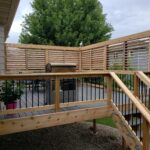
Among small patio privacy fence ideas, a mixed-height screen is often more comfortable than a completely solid wall. A fixed lower section can block views directly into a seating area, while a slatted or louvered upper section gives the design a lighter appearance.
A mixed screen can also match the lower portion of an existing fence without creating a continuous tall wall. Keep any fixed screening where it is most useful, then decide whether the upper portion should admit more daylight.
Before adding height to a fence, confirm who owns it, whether it can support an extension, and what local limits apply. A shared fence may also require permission. Louvered fence examples show how adjustable panels can be incorporated into fencing, but an example design doesn’t prove your existing posts are strong enough.
7. Move the Patio Furniture to Reduce Unwanted Views
Sometimes the simplest privacy improvement is a different layout. Moving a table closer to the house, turning a bench away from a window or placing a tall planter behind a chair may solve the most uncomfortable view without any new construction.
This can also create more usable circulation space. Small patio ideas tend to work better when people can move between the door, seating and garden without squeezing past posts and oversized containers.
Try the layout with temporary furniture or cardboard markers before building. A panel that looks narrow on paper can feel quite large once you account for posts, feet and the room needed to walk around it.
8. Use a Pergola Side Screen for Overlooked Patios
When the unwanted view comes from above, a side fence alone may not provide enough screening. A pergola with an appropriately positioned side panel, or a separate shade feature, can help interrupt higher sightlines while defining a small sitting area.
Be mindful of the sun’s direction. A dense overhead structure can leave a narrow townhome yard darker than expected, especially where neighbouring buildings already cast shade. In some settings, an angled side screen offers more useful privacy with less overhead coverage.
The FLEXfence system can be incorporated into louvered sections of a properly designed outdoor structure, but the hardware is not a complete pergola or roofing system. Any overhead or attached construction needs suitable structural design and local approval.
What About a Condo Privacy Screen?
A condo privacy screen may need to meet different rules from a screen in a privately owned townhome yard. Balconies, terraces and shared ground-level patios can be common elements or limited common elements, even when residents have exclusive use of the space.
Before drilling into a wall, deck surface or railing, confirm what your condominium corporation or homeowners’ association allows. Ask about maximum height, permitted materials, appearance requirements, attachments and whether freestanding structures are allowed.
A freestanding planter or movable screen may be easier to approve than a permanent structure, but it is not automatically permitted or safe. Screens must be secured against tipping or movement, and balcony installations require particular attention to weight limits and wind exposure.
How to Make a Backyard Feel Bigger While Adding Privacy
Plan privacy and usable space together. Too many screens, bulky planters and competing finishes can make a compact yard feel crowded, even when each addition looks attractive on its own.
Choose one primary screening location, then keep the remaining surfaces simple. Repeating a timber finish from the fence on the deck or bench can make the space feel connected. Keeping planting concentrated along the boundary also leaves more open floor space for furniture.
For a narrow backyard, long, uninterrupted sightlines can make a difference. Rather than dividing the yard into several tiny zones, create one comfortable seating area and leave a clear path toward the garden or rear gate.
Check the view from inside the yard and from the neighbouring side, where accessible. An angled panel can sometimes block the troublesome line of sight without reaching the height of a full fence.
Materials, Installation and Maintenance to Consider
Whatever small backyard privacy ideas you choose, outdoor exposure matters. Timber should be suitable for the climate and finished or maintained according to its supplier’s guidance. Hardware, anchors and fasteners should also be appropriate for exterior use and the structure they support.
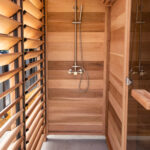
Check where water will drain around posts and planters. A screen placed too close to siding can trap leaves and moisture, making maintenance difficult. Leave access for cleaning and upkeep. Similar issues arise with outdoor shower privacy walls, where airflow and drying conditions are important parts of the design.
Local fence rules, setbacks and shared-property requirements can affect the design. For structures attached to a home or deck, verify the existing framing’s capacity rather than assuming it can support additional loads. If you are unsure, consult a qualified contractor or building professional before construction.
Planning Privacy for a Small Townhome Backyard
Before buying materials, mark the boundary, furniture footprints and entry path. Then identify the one or two locations where a screen would make the most difference. This makes it easier to avoid crowding a small yard with structures that do not improve privacy.
For a screen that can be adjusted after installation, the FLEXfence Louver System supplies the hardware for a custom louvered section. The FLEXfence Showcase includes completed-project examples, while the DIY project plans provide construction starting points for suitable designs.
Frequently Asked Questions
How can I make a small backyard private without a tall fence?
Place a privacy screen or tall planter where it blocks the main view into your seating area. You can also reposition furniture, use a trellis or install adjustable louvers. The best choice depends on where neighbours can see into the yard and how much light you want to keep.
What is the best privacy screen for a narrow townhome backyard?
A narrow panel that screens one exposed side is often more practical than enclosing the entire yard. Fixed slats, adjustable louvers and planted trellises are options. Check the sightlines, available walking space and installation requirements before choosing.
Can I install a privacy screen on a condo patio?
Possibly, but check your condominium corporation or property manager’s rules first. Permanent attachments, freestanding panels, height limits and material choices may all be restricted. Balcony installations also need appropriate attention to wind and structural loads.
Do adjustable louvers provide complete backyard privacy?
Not necessarily. Adjustable louvers can increase screening when closed, but privacy depends on their angle, spacing, placement and viewing direction. Check the design from neighbouring windows and other relevant sightlines before building.
How can I add privacy to a small deck?
A screen along the most exposed edge, a corner divider or suitable planting can make a deck feel more private. Any screen attached to a deck or railing needs adequate structural support, and elevated decks may have additional safety requirements.
Are plants or privacy panels better for a small patio?
Plants create a softer appearance but need growing space, water and maintenance, and coverage changes with the seasons. Panels provide more predictable screening but can make a small patio feel enclosed. Combining one panel with modest planting can work well.
Create a More Private and Comfortable Outdoor Space
Adding privacy to your deck doesn’t have to mean sacrificing airflow, sunlight, or style. The best privacy screen solutions help you create an outdoor space that feels comfortable, functional, and welcoming throughout the season.
From deck privacy panels and privacy dividers for decks to fully adjustable louver systems, today’s homeowners have more options than ever. By choosing a solution that balances privacy with flexibility, you can create a deck that works for the way you actually live and entertain outdoors.
Enjoy all the benefits of FLEXfence by adding it to your DIY project list today!
With the FLEXfence louver system, the design possibilities are endless. Transform your space with minimal effort at an affordable price and experience all the benefits FLEXfence Louver Kit has to offer!
Check out the stores where you can buy this marvellous hardware kit!