DIY Outdoor Shower Privacy Wall Ideas for Cottages and Pools
An outdoor shower is one of those features that makes perfect sense once you have one. At a cottage, it gives swimmers a place to rinse off before bringing lake water, sand and mud indoors. Around a pool, it can keep chlorine and wet footprints outside. And sometimes, showering outdoors on a warm summer day is simply better than showering indoors.
Privacy, however, needs some planning.
A good outdoor shower privacy wall should block unwanted views without making the shower feel like a tiny wooden closet. It also needs to stand up to outdoor conditions, allow wet surfaces to dry and fit naturally with the surrounding cottage, pool deck, fence or backyard.
That leaves plenty of room for creativity. A DIY outdoor shower enclosure can use solid walls, freestanding screens, fencing or adjustable louvers. With our FLEXfence Louver System, you can also build a privacy wall that opens and closes, giving you more control over privacy, airflow and light.
Key Takeaways
- Plan an outdoor shower privacy wall around sightlines, not height alone.
- Solid walls provide substantial privacy but can restrict airflow and natural light.
- Adjustable louvers can be closed while the shower is in use and opened afterward for ventilation.
- A freestanding privacy screen can work well when you don’t want to attach an enclosure to a cottage, pool house or other structure.
- Choose exterior materials that can tolerate moisture and weather exposure, and consider drainage before deciding where to build.
What Makes a Good Outdoor Shower Privacy Wall?
Privacy is obviously the first requirement, but it shouldn’t be the only one. The best outdoor shower privacy wall blocks the necessary sightlines while still allowing enough airflow and light for the space to feel comfortable and dry after use. Depending on the location, that could mean a solid wall, freestanding screen or adjustable louvered privacy wall.
An outdoor shower privacy wall also needs to account for airflow, water, sunlight and the way people move through the space. A shower beside a pool may only need a strategically positioned screen, while a cottage shower overlooking neighbouring properties could require a more substantial enclosure.
Before deciding on a design, stand where the shower will be located and look around. Where are the cottage windows? Can someone see the shower from the deck? What about a neighbouring property, dock, road or second-storey window?
Those sightlines tell you more about the privacy you need than an arbitrary wall height ever could.
You should also think about what happens after the shower is used. A permanently enclosed area may remain damp longer, particularly if it receives little sunlight. A design that allows more air to move through the space can help create a more comfortable outdoor shower area.
1.Build a Simple Three-Sided Outdoor Shower Enclosure
One of the simplest DIY outdoor shower privacy ideas is a three-sided enclosure.
If the shower is positioned against a cottage, cabana, pool house or other existing structure, that building may already provide one wall. Two additional privacy walls can then create a partially enclosed shower without requiring four completely enclosed sides.
A freestanding version can also work. Three walls can surround the shower while the entrance is positioned away from the primary sightlines. Depending on the location, that may provide enough privacy without adding a door.
The advantage is simplicity. The disadvantage is that solid walls can block airflow and natural light, especially when the shower footprint is small.
Before building, consider whether every wall really needs to be completely solid. In some locations, combining solid sections with louvers can provide privacy while keeping the space more open.
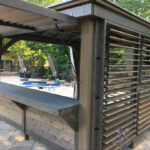
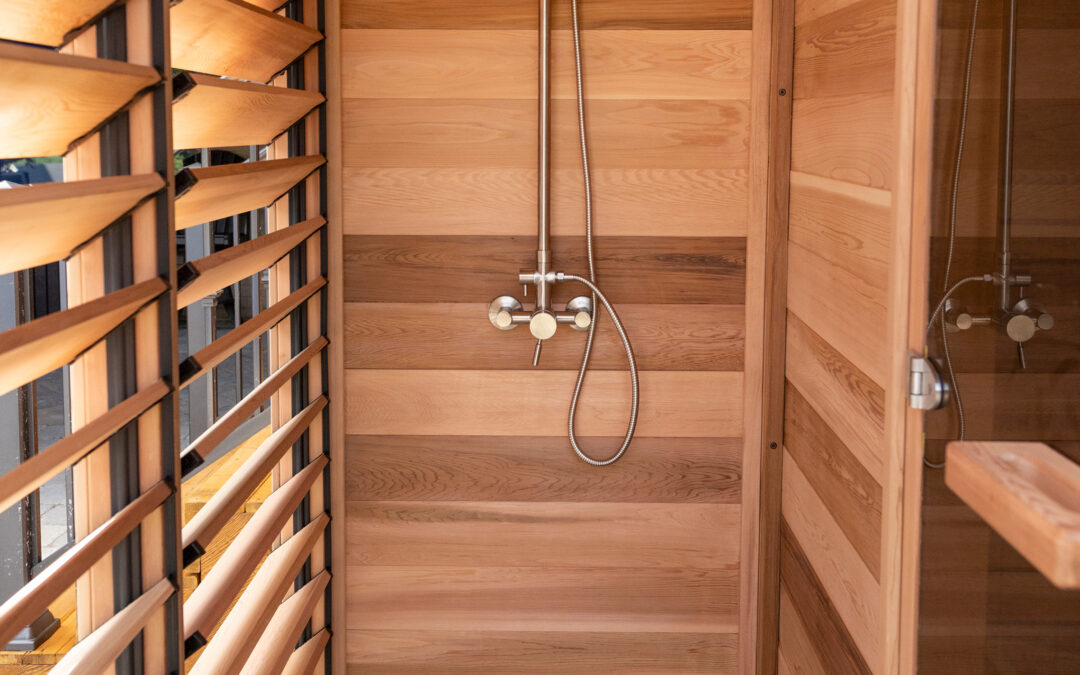
2.Build an Adjustable Louvered Outdoor Shower Privacy Wall
A louvered privacy wall is particularly well suited to an outdoor shower because your privacy needs change depending on whether someone is actually using it.
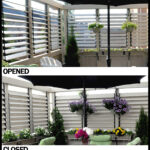
Close the louvers when it’s shower time. Open them afterward to allow more light and airflow into the enclosure.
Our FLEXfence Louver System is a DIY hardware system that lets you create adjustable louvered panels using 1 x 6 boards. The rails can be installed to create either horizontal or vertical louver operation, giving you flexibility in both the appearance and function of the finished privacy wall. For an outdoor shower, that adjustability means the same wall can provide greater screening while the shower is being used and a more open, ventilated space afterward.
The standard four-foot FLEXfence kit includes two four-foot rails, 22 brackets, an operating bar and fastening hardware. The rails can also be sized for different projects, so you’re not locked into building a privacy wall with one standard set of dimensions.
This can be especially useful around a shower. Instead of choosing permanently between an open screen and a solid wall, you can adjust the boards according to how you’re using the space.
If you’ve never built with adjustable louvers before, our DIY louver project plans provide examples of how the system can be incorporated into different outdoor structures.
3.Use a Freestanding Outdoor Shower Privacy Screen
Not every outdoor shower needs a complete enclosure.
Sometimes the problem is one specific view. Perhaps the shower is already protected by the cottage on two sides but visible from the deck. Or maybe a pool shower is tucked beside a cabana and only needs screening from the main seating area.
In those situations, a freestanding outdoor shower privacy screen may be enough.
A freestanding screen can also be useful at seasonal properties because you don’t necessarily have to integrate the privacy wall into the cottage itself. The screen can become a separate architectural feature that defines the shower area without visually attaching it to the building.
We already have a DIY louvered screen plan that can provide a starting point. The example uses two louvered panels, each measuring 78 inches by 26 inches. The plans are intended as a guide and can help you understand the framing, materials and construction involved before adapting the idea for your own outdoor space.
For exterior applications, the plan notes that cedar can be used in place of pine. Whatever lumber you choose, make sure it is appropriate for exterior use and the wet environment surrounding an outdoor shower.
4.Add a Privacy Wall Beside a Pool Shower
Pool showers don’t always need the same level of enclosure as a shower tucked behind a cottage.
If the shower is mainly being used to rinse off before or after swimming, a single privacy wall may be enough to separate it from a patio, seating area or neighbouring property.
Placement matters here. A well-positioned screen can block the important view without surrounding the shower on every side.
This is also an opportunity to make the shower feel like part of the pool design rather than an afterthought. Match the wood or finish to the pool fence, deck, pergola or cabana, and the privacy wall becomes another feature of the outdoor space.
For ideas about incorporating louvers into larger pool structures, browse our FLEXfence project showcase, which includes swimming pool enclosures and cabanas along with fences, screens, pergolas and other outdoor projects.
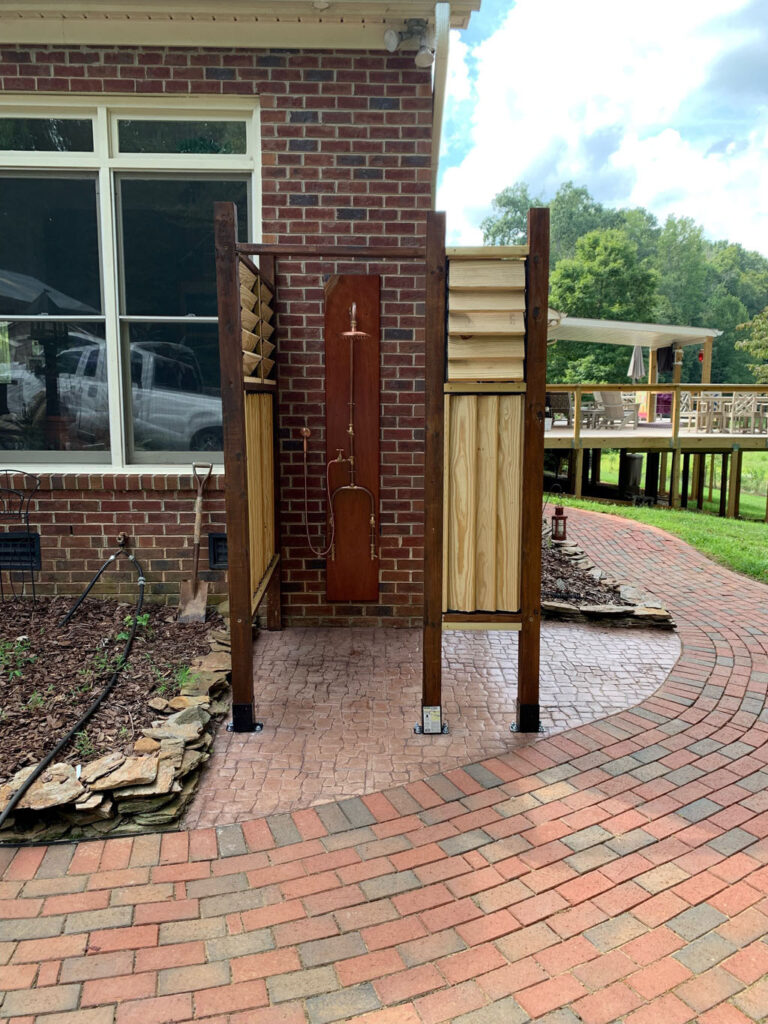
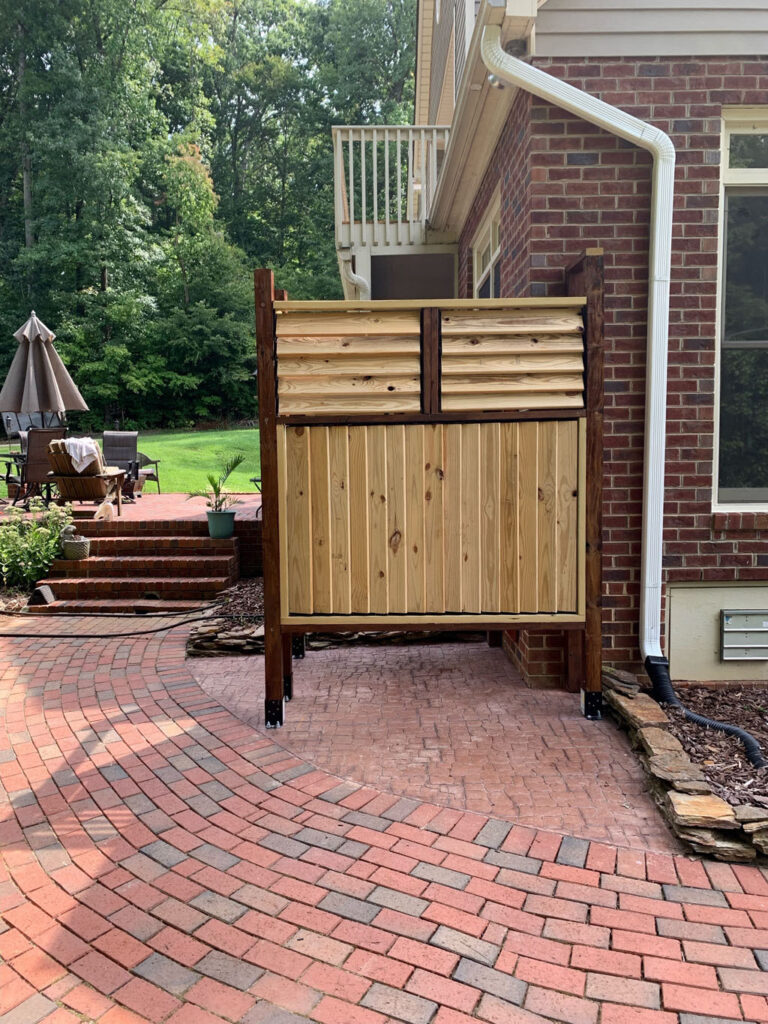
5.Combine a Solid Lower Wall with Louvers Above
An outdoor shower doesn’t necessarily require the same degree of screening from floor to ceiling.
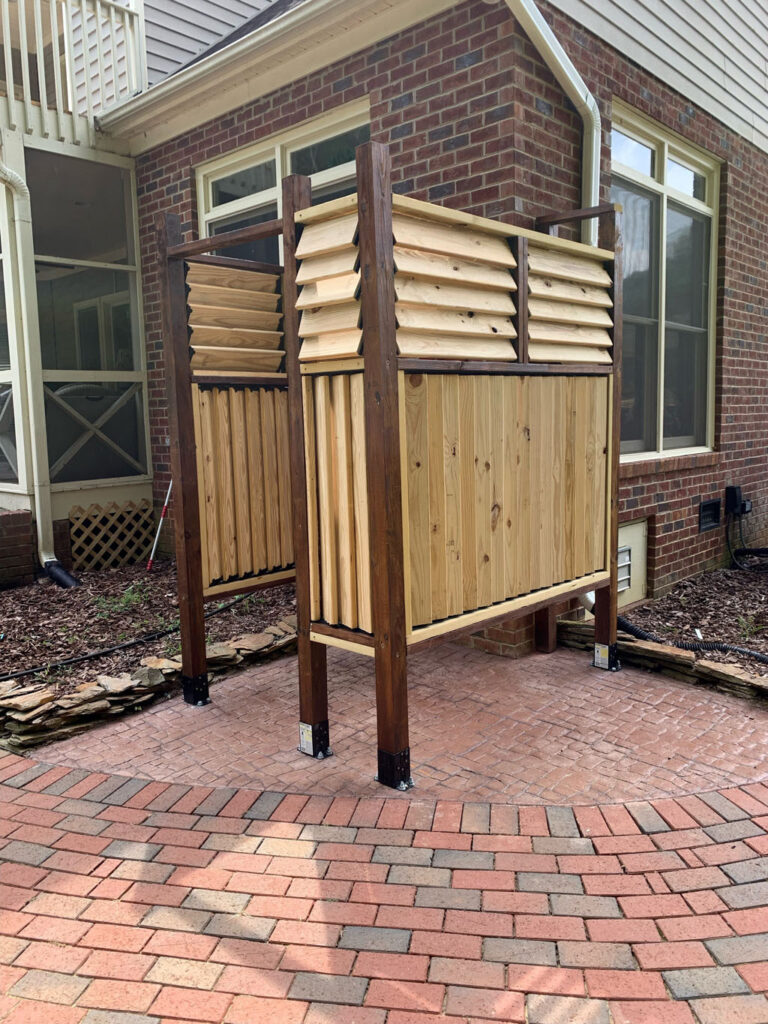
One practical option is to build the lower portion of the privacy wall with solid boards and add adjustable louvers above. The solid section provides consistent screening where privacy is most important, while the louvered upper section can be adjusted for additional privacy, airflow or light.
This approach can also make a tall privacy wall feel less imposing.
Instead of looking like a solid fence surrounding the shower, the upper louvers break up the visual weight of the structure. Open them when the shower isn’t being used and the enclosure becomes much more connected to the surrounding outdoor space.
It’s a useful design concept for cottages in particular, where you may want privacy without blocking the view, breeze and outdoor character that made you put the shower outside in the first place.
6. Use Horizontal Louvers for a More Contemporary Look
The direction of the boards can have a surprisingly large effect on the finished outdoor shower.
Horizontal louvers tend to create a clean, contemporary appearance that works particularly well with modern cottages, pool houses and backyard structures. Vertical louvers can create a different architectural effect and may work better with existing vertical siding or fencing.
FLEXfence can be configured for horizontal or vertical operation, so you can choose the orientation that works with the structure and design you’re building.
Your lumber choice also changes the character of the finished wall. Cedar can create a natural cottage look, while painted or stained boards can coordinate with an existing deck, fence or cabana.
The goal isn’t to make the shower privacy wall disappear. Done well, it can become one of the design features of the outdoor space.
7. Extend an Existing Fence to Create Shower Privacy
If your outdoor shower will be located near a fence, you may already have most of your privacy wall.
Rather than building a completely separate enclosure, consider whether an existing fence can become one side of the shower area. A new screen or louvered section can then be positioned to block the remaining sightline.
Adjustable louvers can also be incorporated into sections of fencing rather than the entire fence. That gives you the ability to add privacy where you need it without rebuilding a complete fence line.
Our louvered fence projects show several ways FLEXfence can be used for complete fences, louvered sections and privacy walls. We also provide downloadable plans for different DIY louvered fence projects if you want to build the structure yourself.
8. Add a Louvered Gate to the Outdoor Shower
If your location requires a fully enclosed outdoor shower, don’t forget about the entrance.
A solid gate provides privacy, but it can also make a small enclosure feel even more closed in. A louvered gate gives you another way to provide screening while maintaining the design of the surrounding walls.
It can also make the enclosure look intentional. Instead of adding a generic gate after you’ve finished building three carefully designed walls, the entrance becomes part of the overall project.
Our DIY full-sized louvered gate plan provides dimensions, a materials list, required tools and construction guidance that can be adapted to your project.
Gallery
How High Should an Outdoor Shower Privacy Wall Be?
There is no single height that works for every outdoor shower.
A privacy wall needs to be high enough to block the relevant sightlines. That may depend on the shower user’s height, the slope of the property and whether someone could see into the shower from a neighbouring deck, road, dock or upper-storey window.
This is why designing around sightlines is so important. A tall wall on the wrong side of the shower doesn’t accomplish much.
Before you start construction, stand inside the proposed shower area while someone checks the views from the surrounding property. If a neighbouring deck sits above the shower, for example, you may need a different design than you would on a flat, secluded property.
Local requirements may also affect the height, location or construction of outdoor structures. Check the applicable rules for your property before finalizing the design.
What’s the Best Material for an Outdoor Shower Privacy Wall?
The best material for an outdoor shower privacy wall is one designed to withstand exterior exposure, repeated moisture and changing weather conditions while delivering the look you want. For DIY wood privacy walls, exterior-suitable lumber such as cedar is a popular option.
Wood is a natural choice for cottage and pool environments because it can coordinate with decks, fences, pergolas and other outdoor structures. Cedar is one option for exterior louvered projects and is identified as an exterior alternative in our louvered screen plans.
Whatever lumber you choose, remember that an outdoor shower is a particularly wet environment. Follow the lumber supplier’s recommendations for exterior use, finishing and maintenance.
The FLEXfence hardware itself is made from recycled PVC and is UV stabilized for outdoor use. Because the system is hardware rather than a complete pre-built panel, you can choose the boards that make sense for your design and environment.
Don’t Forget About Outdoor Shower Drainage
Privacy walls tend to get the design attention, but water has to go somewhere.
Think about drainage before deciding exactly where the shower and enclosure will sit. The privacy structure shouldn’t trap water around posts or create an area that remains unnecessarily wet after every use.
The type of shower, plumbing arrangement and local wastewater requirements can also affect how and where an outdoor shower should be installed. Requirements aren’t the same everywhere, so check the applicable local rules before connecting plumbing or deciding how shower water will be handled.
Sorting this out before building the privacy walls is considerably easier than discovering a drainage problem once you’ve built a beautiful enclosure around it.
Why Adjustable Louvers Work So Well for Outdoor Shower Privacy
An outdoor shower is unusual because you may want maximum privacy for 10 minutes and considerably less enclosure for the other 23 hours and 50 minutes of the day.
That’s where adjustable louvers make sense.
When someone is using the shower, close the louvers to increase privacy. When the shower is empty, open them to allow more airflow and light through the space. You can also partially open the louvers when you want a balance between screening and ventilation.
This is different from lattice or permanently spaced boards, where the level of privacy is fixed when you build the wall. It’s also different from a completely solid privacy wall, which remains closed whether anyone needs the privacy or not.
We’ve used the same concept for privacy screens, fences, pool enclosures, hot tub surrounds and other outdoor projects. An outdoor shower is another situation where the ability to change the position of the louvers can be particularly useful.
If you’re considering different types of privacy screening elsewhere in your yard, our guide to privacy screen ideas for decks explains more about using privacy walls and adjustable screens in outdoor spaces.
Planning Your DIY Outdoor Shower Privacy Wall
Start with the location rather than the materials.
Figure out which views need to be blocked, where people will enter the shower and how much of the area actually needs to be enclosed. Then consider airflow, sunlight, drainage and how the privacy wall will fit with the surrounding cottage, pool deck or backyard.
You may discover that you need three full walls. You may only need one strategically placed screen. Or you may want a combination of solid panels and adjustable louvers.
If you want the ability to change the balance between privacy and openness, the FLEXfence Louver System gives you the hardware to build a custom louvered privacy wall with your choice of boards.
Already thinking about what you could build? Browse our DIY louver project plans for plans, materials lists and project ideas, or visit the FLEXfence Showcase to see what other DIYers and professionals have created.
Frequently Asked Questions
How do you make an outdoor shower private?
Start by identifying the main sightlines into the shower from neighbouring properties, decks, windows, roads and other outdoor areas. Depending on the location, you can create privacy with a full enclosure, three-sided structure, freestanding privacy screen, existing fence or adjustable louvered wall.
How high should an outdoor shower privacy wall be?
There is no universal height for an outdoor shower privacy wall. The appropriate height depends on the shower location, surrounding sightlines, property elevation and applicable local requirements. Design the wall around the views that actually need to be blocked rather than choosing a height arbitrarily.
What is the best material for an outdoor shower privacy wall?
Exterior-rated wood is a popular choice because it can coordinate with decks, fences and cottage structures. Cedar is one option for exterior louvered projects. Whatever material you choose should be appropriate for repeated moisture and outdoor exposure.
Can you use louvers for an outdoor shower privacy screen?
Yes. Adjustable louvers are particularly useful for an outdoor shower because they can be closed for greater privacy and opened afterward for more airflow and natural light. The FLEXfence Louver System can be used to build adjustable louvered privacy panels with 1 x 6 boards.
Can I build a freestanding outdoor shower privacy screen?
Yes. A freestanding screen can be useful when you only need to block one or two sightlines or don’t want to attach the privacy structure to an existing building. FLEXfence offers DIY louvered screen plans that can be used as a starting point for a custom outdoor project.
Do I need a permit for an outdoor shower?
Permit and regulatory requirements vary by location and project. Depending on where you live and how the shower is built, local requirements may apply to plumbing, wastewater, drainage, setbacks or the structure itself. Check the requirements that apply to your property before construction.
Create a More Private and Comfortable Outdoor Space
Adding privacy to your deck doesn’t have to mean sacrificing airflow, sunlight, or style. The best privacy screen solutions help you create an outdoor space that feels comfortable, functional, and welcoming throughout the season.
From deck privacy panels and privacy dividers for decks to fully adjustable louver systems, today’s homeowners have more options than ever. By choosing a solution that balances privacy with flexibility, you can create a deck that works for the way you actually live and entertain outdoors.
Enjoy all the benefits of FLEXfence by adding it to your DIY project list today!
With the FLEXfence louver system, the design possibilities are endless. Transform your space with minimal effort at an affordable price and experience all the benefits FLEXfence Louver Kit has to offer!
Check out the stores where you can buy this marvellous hardware kit!